

OVERVIEW
There are cities you enjoy visiting, and then there are cities you can’t stop thinking about after you leave. Porto was one of those places for us and quickly became one of our favorite cities in all of Europe.
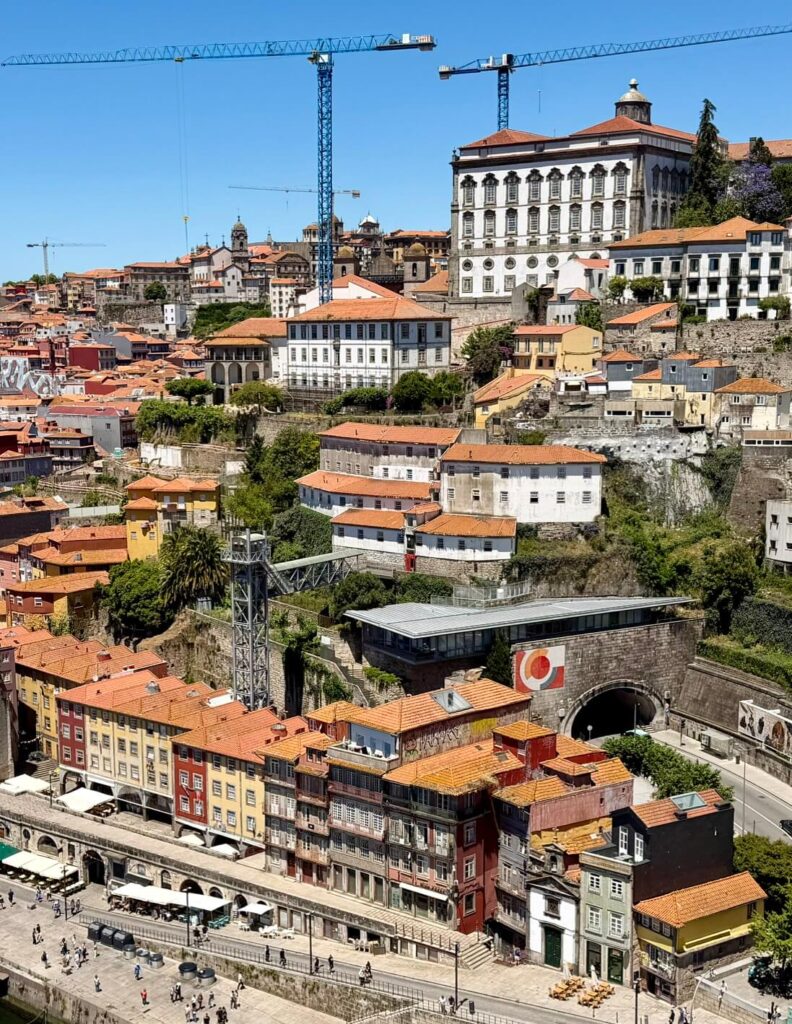
Colorful buildings spill down the hillsides, historic churches stand beside lively cafés, and every turn seems to reveal another incredible viewpoint over the Douro River. We loved that Porto feels authentic, with enough famous landmarks to fill your days while still rewarding those who wander beyond the busiest streets.
This 5-day Porto itinerary includes everything you need to plan an unforgettable visit, from where to stay and the best time to go to a detailed day-by-day guide through the city’s top attractions.
We’ve also included two of our favorite day trips, Braga and Aveiro, which are easy to reach and well worth adding to your itinerary. No matter how many days you have, Porto is a destination bound to leave a lasting impression.


STATISTICS AND HISTORY
Porto is Portugal’s second-largest city, with a population of about 235,000 residents and more than 1.7 million people living throughout the greater metropolitan area.
Located in northern Portugal at the mouth of the Douro River, the city stretches across steep hillsides before meeting the Atlantic Ocean. Its compact historic center makes it easy to explore on foot, though the frequent climbs are part of the experience.
The Douro has shaped Porto for centuries. Long before modern roads, it served as the region’s primary transportation route, carrying wine, olive oil, and other goods between the interior and the coast.
The city’s deep connection to port wine helped establish Porto as an important trading center, particularly after British merchants expanded the export trade during the 17th and 18th centuries.
Today, Porto blends its rich history with a modern, creative energy. Medieval streets lead to elegant boulevards, while colorful azulejo tiles decorate churches, train stations, and historic buildings throughout the city.
Traditional markets, neighborhood cafés, and family-owned restaurants continue to play an important role in daily life. In 1996, Porto’s historic center was recognized as a UNESCO World Heritage Site for its remarkable architecture and cultural significance.


WHERE TO STAY
Choosing where to stay in Porto depends on the type of trip you’re planning, but most visitors will be happiest within or near the historic center.
Staying around Baixa puts you within walking distance of many of the city’s top attractions, including São Bento Station, Livraria Lello, Avenida dos Aliados, and the Ribeira district. It’s an excellent base if you want to spend your days exploring on foot.
For postcard-worthy river views and a lively atmosphere, consider the Ribeira neighborhood. Its narrow streets are lined with restaurants, cafés, and outdoor terraces, making it one of Porto’s most scenic places to stay.
Just across the Douro River, Vila Nova de Gaia offers a quieter alternative. Many hotels overlook Porto’s skyline, and you’ll be close to the famous port wine cellars, waterfront promenade, and the Gaia Cable Car.


GETTING AROUND
Getting around Porto is surprisingly easy, especially if you’re staying near the historic center. Most of the city’s main attractions are within walking distance, although be prepared for steep hills and plenty of staircases. Comfortable shoes are a must.
Porto also has an excellent public transportation network that includes the Metro, city buses, and historic trams. The Metro is the fastest way to reach the airport and several neighborhoods outside the city center, while buses fill in areas the Metro doesn’t serve.
Ride-sharing services and taxis are also widely available and are often an affordable option after a long day of sightseeing.
If you’re planning to visit Vila Nova de Gaia, simply walk across the Dom Luís I Bridge or take the Gaia Cable Car for a scenic descent to the riverfront.
For a different perspective, hop aboard one of the traditional Douro River cruises. They offer a relaxing way to admire Porto’s skyline while avoiding the hills that define the city


HOW LONG TO STAY
Three days is an ideal amount of time to experience Porto’s highlights without feeling rushed. That gives you enough time to explore the historic center, stroll along the Ribeira waterfront, cross into Vila Nova de Gaia, tour a port wine cellar, and enjoy several of the city’s best viewpoints.
You’ll also have time to slow down between attractions and enjoy Porto’s cafés, restaurants, and relaxed atmosphere.
If your schedule is tight, two full days will still cover many of the major sights. On the other hand, four or five days allows for day trips to destinations like the Douro Valley, Braga, Guimarães, or Aveiro.


WHEN TO VISIT
Porto is a year-round destination, but the best times to visit are spring (April through June) and fall (September and October).
During these months, temperatures are comfortable, flowers and gardens are in bloom or autumn colors begin to appear, and sightseeing is much more enjoyable than during the peak summer crowds.
Summer brings long days, lively festivals, and bustling outdoor cafés, but it’s also the busiest season. Expect higher hotel prices and more visitors at popular attractions.
Winter is cooler and wetter, yet Porto rarely experiences severe cold. Fewer tourists mean quieter streets and a more relaxed atmosphere, making it a great time to explore museums, historic churches, and local restaurants.

5-DAY PORTO ITINERARY
Day 1
Your first day in Porto is all about experiencing the city’s historic heart. Begin your morning at Mercado do Bolhão, Porto’s beautifully restored market filled with local vendors selling fresh produce, pastries, cheeses, and regional specialties.
Just around the corner, admire the striking blue-and-white tile façade of the Capela das Almas (Chapel of Souls). More than 15,000 hand-painted azulejo tiles cover the church’s exterior, illustrating scenes from the lives of Saint Francis of Assisi and Saint Catherine.


Continue along Rua Santa Catarina, Porto’s busiest shopping street. You’ll pass a mix of local boutiques, international retailers, historic bakeries, and cafés, making it one of the city’s best streets for shopping and people-watching.
Street musicians often perform throughout the day, adding to the lively atmosphere, while souvenir shops offer everything from cork products and hand-painted ceramics to locally produced port wine.
For lunch, stop at the iconic Majestic Café, one of Europe’s most elegant historic cafés. On the ceiling you’ll notice the café’s beautifully preserved Art Nouveau interior, with its carved wood, stained glass, and ornate mirrors.


Continue to the colorful Igreja de Santo Ildefonso (below left), an 18th-century Baroque church and one of Porto’s most recognizable landmarks. Similar to Capela das Almas, it’s façade is covered with thousands of blue-and-white azulejo tiles depicting scenes from the life of Saint Ildefonso, creating one of the city’s most photogenic church exteriors.
Just around the corner you’ll find the lively Praça da Batalha (below right), where local artisans often sell handmade crafts, artwork, and souvenirs from small kiosks. Maddie found a beautifully handcrafted leather journal along with a few pieces of bargain jewelry to bring home.


Just a short walk away stands the magnificent São Bento Railway Station, where more than 20,000 hand-painted azulejo tiles depict pivotal moments from Portugal’s history. Even if you’re not catching a train, it’s one of Porto’s must-see attractions.
Interesting Fact: Azulejo tiles are one of Porto’s defining architectural features, decorating churches, train stations, homes, and public buildings throughout the city. Introduced centuries ago, these hand-painted ceramic tiles were used not only for decoration but also to tell religious and historical stories while protecting buildings from the elements.


From the train station, walk through Praça da Liberdade, the city’s grand central square, before continuing onto the wide boulevard of Avenida dos Aliados. Surrounded by elegant architecture, cafés, and the impressive City Hall, this is one of Porto’s most recognizable gathering places.
Before finishing your day, stop for a photo with the giant Porto letters located on the steps of the Porto City Hall.

Day 2
Day two in Porto takes you through the city’s most iconic landmarks before ending along the scenic Douro River. The route flows naturally downhill, with plenty of opportunities to pause for viewpoints, cafés, and photographs along the way.
Start your morning at Livraria Lello, one of the world’s most beautiful bookstores, famous for its ornate wooden staircase and stained-glass ceiling. Arrive early to avoid the longest lines, but unless you spring for the pricey VIP ticket, expect to be shoulder-to-shoulder with hundreds of other visitors.


Just around the corner are Igreja do Carmo and Igreja dos Carmelitas, two neighboring churches separated by one of Portugal’s narrowest houses. Though they appear almost like a single building, the churches were constructed at different times and showcase distinct Baroque and Rococo details.
Interesting Fact: The tiny one-meter-wide house was built in the 1700s to comply with a law requiring religious buildings not to share a common wall, and today it’s one of Porto’s most unusual architectural curiosities.


Continue a short distance to Torre dos Clérigos. Completed in 1763, the 249-foot (76-meter) Baroque bell tower was once the tallest structure in Portugal and remains one of the city’s most recognizable landmarks.
Buy a ticket to climb the tower for sweeping panoramic views across the city and the Douro River. Admission also includes access to the Clérigos museum, where you can explore historic rooms, religious artifacts, and elevated interior viewpoints overlooking the ornate church.


From there, make your way to Miradouro da Vitória (left in the gallery below), one of Porto’s best viewpoints. The overlook provides sweeping views of the Porto Cathedral, Dom Luís I Bridge, and the colorful buildings cascading down the hillside.
Continue downhill along Rua das Flores (right in the gallery below), a lively pedestrian street lined with cafés, local shops, and beautifully restored historic buildings. One of our favorite things to do was pop into the many gourmet food shops specializing in Portuguese canned seafood, where friendly staff often offered free samples of premium anchovies, sardines, and other local delicacies.


Next, visit the elegant Palácio da Bolsa, known for its richly decorated rooms, including the stunning Arab Room. Built in the 19th century as Porto’s former stock exchange, the palace reflects the wealth and commercial importance of the city’s powerful merchant community.
Right next door, step inside the Church of São Francisco, whose lavish gilded interior contrasts sharply with its understated Gothic exterior. Inside, an extraordinary amount of gold leaf covers intricate Baroque woodcarvings, making it one of the most opulent church interiors in Portugal.


Before reaching the waterfront, wander through the quiet streets around São João Novo, one of Porto’s less-visited historic neighborhoods. Along the way, look for small churches, weathered stone façades, tiled buildings, hidden courtyards, and steep narrow lanes that offer a quieter glimpse of old Porto away from the busiest tourist routes.
End the day along the Ribeira Promenade, Porto’s lively riverfront lined with colorful buildings, restaurants, cafés, and frequent street performers. In the evening, the area fills with energy as crowds gather along the Douro for views of Vila Nova de Gaia and the illuminated Dom Luís I Bridge.


Day 3
Day three shifts to Porto’s oldest neighborhood before crossing the Douro River to Vila Nova de Gaia, where historic viewpoints, riverside walks, and world-famous port wine cellars come together.
Start at Porto Cathedral (Sé do Porto), one of the city’s oldest and most important landmarks. Its hilltop location offers an excellent introduction to medieval Porto. Originally built in the 12th century, the cathedral blends Romanesque, Gothic, and Baroque elements that reflect centuries of additions and renovations.


Before leaving the area, walk to nearby Miradouro da Rua das Aldas and Miradouro da Igreja de São Lourenço, two scenic overlooks offering amazing views of Porto’s historic rooftops.
Continue down the steps to nearby Saint Lawrence Church (Igreja de São Lourenço), commonly known as Igreja dos Grilos, an imposing church perched above Porto’s historic center. Built primarily in the 16th and 17th centuries by the Jesuits, its monumental stone façade and restrained interior provide an interesting contrast to the richly gilded churches found elsewhere in the city.
From here, wander through the narrow lanes to Largo da Pena Ventosa, a small, picturesque square surrounded by colorful old houses and stone façades. This maze of steep streets and tiny plazas is part of one of Porto’s oldest neighborhoods and offers a glimpse of what the medieval city felt like before reaching the busier Ribeira waterfront below.


Just a few steps away, step inside Igreja de Santa Clara, whose remarkably gilded Baroque interior is one of the city’s hidden treasures. Its relatively plain exterior gives little hint of the dazzling gold-covered woodwork inside.
Much of the interior is covered in intricate talha dourada, the elaborate gilded woodcarving style that became a hallmark of Portuguese Baroque churches. The church dates back to the 15th century, but its richly decorated interior was largely transformed during the 17th and 18th centuries.


From here, continue to the iconic Dom Luís I Bridge. Walk across the upper deck for unforgettable views of both Porto and Vila Nova de Gaia before climbing to Miradouro da Serra do Pilar, widely considered the city’s best panoramic viewpoint.
Ride the Gaia Cable Car down to the waterfront, where the Gaia Riverfront Walk follows the Douro past cafés, terraces, and historic warehouses. Spend the afternoon touring one of the renowned Vila Nova de Gaia Port Cellars, learning how Portugal’s famous port wine is produced and aged.


Finish your day at the nearby World of Wine (WOW), a collection of interactive museums, restaurants, and scenic viewpoints that offers something for every age.
While adults can explore exhibits dedicated to wine, cork, and regional history, kids will love attractions like The Chocolate Story and the colorful Pink Palace, an immersive rosé wine experience with whimsical displays that are fun to explore even if you skip the tastings.
One of our family’s favorite experiences in Porto was at the Chocolate Story, where Maddie and Oliver took a hands-on workshop and made their own cake pops before, of course, sampling plenty of chocolate.


Day 4
For your final two days, venture beyond Porto to discover two of the region’s highlights, Braga and Aveiro. Braga is one of Portugal’s oldest cities, but it feels far from sleepy. Historic churches, inviting cafés, and a youthful energy make it one of the country’s most enjoyable day trips from Porto.
Begin at the Arco da Porta Nova, the elegant gateway into Braga’s historic center. From there, wander along Rua do Souto, a pedestrian street filled with local shops, bakeries, and outdoor cafés.


Along the way, visit the magnificent Santa Maria de Braga Cathedral, the oldest cathedral in Portugal, before continuing to the striking Basilica dos Congregados. Just a short walk away, the remaining tower of the Castle of Braga offers a glimpse into the city’s medieval past.
Pause in Praça da República, the social heart of Braga, where fountains, gardens, and cafés create a welcoming atmosphere. From here, stroll down Avenida da Liberdade, a broad, landscaped boulevard lined with shops, cafés, flowerbeds, and elegant buildings that makes for one of the city center’s most pleasant walks.


Nearby, Santa Barbara Garden provides one of the city’s prettiest green spaces, while the ornate blue façade of Raio Palace showcases Braga’s unique architectural character. Rising just behind it is the elegant Vila Galé Collection Braga, a historic hotel set within a beautifully restored former convent that adds an impressive backdrop to the square.
Before leaving downtown, stop by the colorful BRAGA sign for a classic photo. Rising just behind it is the elegant Vila Galé Collection Braga, a historic hotel set within a beautifully restored former convent that adds an impressive backdrop to the square.


No visit to Braga is complete without seeing Bom Jesus do Monte. Its iconic Baroque staircase climbs through beautifully landscaped terraces, decorative fountains, and statues before reaching one of the best viewpoints in northern Portugal.
If you’d rather skip the climb, the historic water-powered funicular offers a memorable ride to the top. We happened to arrive just as a wedding was finishing, and seeing the beautifully dressed guests spill out of the ornate church made the setting feel even more special.
Just a few minutes away, the hilltop Sanctuary of Our Lady of Sameiro offers a quieter experience, impressive basilica, and sweeping panoramic views. It is one of Portugal’s most important Marian pilgrimage sites and draws thousands of visitors each year, especially during major religious celebrations.


Day 5
The last day of your Porto itinerary will be spent in the coastal towns of Aveiro and Costa Nova. Known for its canals, colorful boats, and distinctive architecture, Aveiro blends history with a relaxed coastal atmosphere that makes it easy to enjoy at your own pace.
Start your morning by walking along the city’s picturesque canals, where traditional moliceiro boats drift past elegant Art Nouveau buildings and lively cafés. If you only do one thing in Aveiro, make it a moliceiro cruise through the canals, it’s the city’s signature experience and the best way to appreciate its unique charm from the water.


Stop at Confeitaria Peixinho, the city’s oldest pastry shop, to sample ovos moles, Aveiro’s signature sweet made with egg yolks and sugar wrapped in delicate wafer shells.
Continue to Praça da República (left in the gallery below), one of Aveiro’s busiest public squares, where you’ll find the beautiful Igreja da Misericórdia with its striking azulejo-tiled façade, colorful street art, and inviting outdoor cafés.
Cross to the other side of the canal and explore Largo da Apresentação (top right in the gallergy below), Aveiro’s busiest gathering place, lined with restaurants, cafés, artisan shops, and local souvenir stores. Anchoring the square is the Igreja de Nossa Senhora da Apresentação (Vera Cruz Church), whose historic façade overlooks the bustling plaza below.


Before leaving town, visit the Salinas de Aveiro, where traditional salt pans have been producing sea salt for centuries and still shape the local landscape. You can walk along the salt ponds to see how seawater is gradually evaporated and harvested using methods that have changed little over generations.
Interesting Fact: Aveiro’s salt trade dates back to at least the Middle Ages, and the prized flor de sal is still carefully skimmed by hand from the surface of the crystallizing ponds.


In the afternoon, drive just 15 minutes to Costa Nova do Prado. This seaside village is famous for its colorful striped beach houses, originally built by fishermen and now one of Portugal’s most recognizable landmarks. Many of these traditional palheiros were once used to store fishing equipment before being converted into homes, cafés, and guesthouses.
The village also sits beside the Aveiro Lagoon, giving you a scenic contrast between calm lagoon waters on one side and the open Atlantic on the other. Wander the waterfront, then cross the dunes to the wide Atlantic beach for a relaxing walk along the sand.


FINAL IMPRESSIONS
By the end of your visit, you’ll likely understand why so many travelers return to Porto again and again. Beyond the famous landmarks are quiet alleyways, neighborhood bakeries, family-run restaurants, and scenic viewpoints that make the city feel welcoming rather than overwhelming.
Three days is enough to experience Porto itself, but adding a couple of extra days for nearby destinations like Braga and Aveiro creates a well-rounded trip through northern Portugal. Each offers something different while remaining easy to reach.
Whether you’re interested in history, architecture, local food, or spectacular river views, Porto delivers a little of everything. We left wishing we had more time, and it’s one of the few European cities we’d happily return to without changing a thing.


0 Comments